
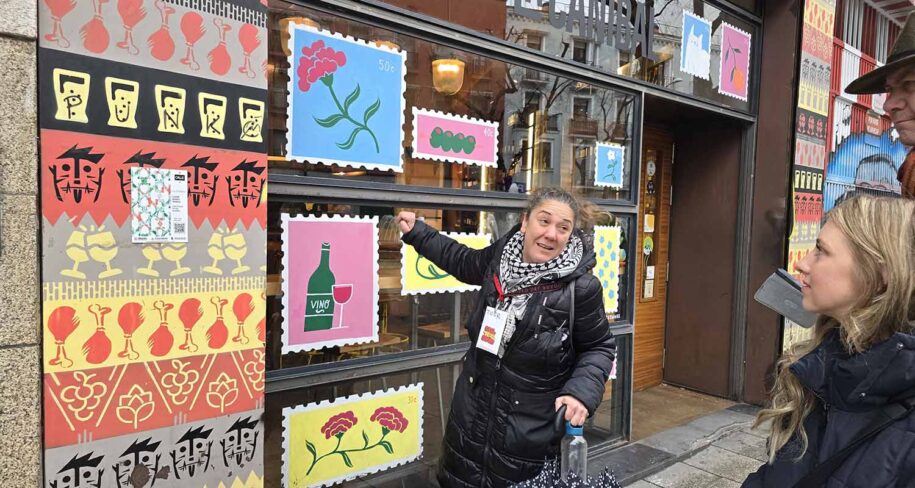
While it’s true that more and more schools and high schools are planning original activities for their students, not all of them know that graffiti and urban art make for the perfect educational experience. That’s why we make available to cycle coordinators and tutors/teachers a school trip in Madrid Spain where students can get hands-on with spray cans.
That’s right, you heard it! An out-of-the-ordinary experience that will hook participants from start to finish. We’ve turned the tables so that the elementary, middle school, or high school trips you’re preparing become a complete success.
What are the characteristics that every school trip in Madrid should have?
Whatever language you choose to participate in a school trip in Madrid Spain, there are a series of details we take care of so you’ll know there’s a complete methodological planning behind it. English, French, and Spanish are the most commonly offered services for a complete cultural and linguistic experience. Pay attention to the information we’ll share below.
Thanks to years of work in educational trips in Madrid, we’ve managed to develop a teaching unit adapted to each cycle, focused exclusively on street art. Vocabulary, objectives, and practical activities that attend to all students’ needs. In most cases, for teenagers from 12 to 17 years old.
These are therefore specialized guided visits, although student groups also have at their disposal a workshop led by male and female graffiti artists where they can paint a personalized design on a wall prepared for the occasion.
Integration of curriculum and basic competencies
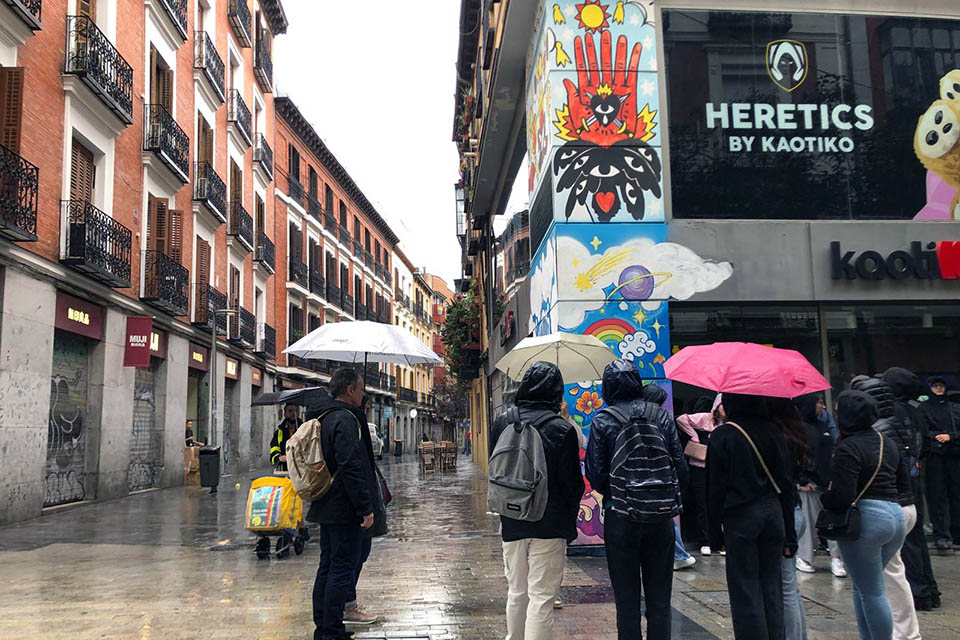
When talking about activities carried outside the classroom, a school trip in Madrid Spain could become the best way to make students discover Madrid’s urban culture. This way, they’ll learn about the context that surrounds them, the place they’re discovering, and the real problems that adults and other children/teenagers face daily. Additionally, training them in 21st-century values.
Subjects like math, Spanish/English/French language, or art education itself are integrated into every guided visits for groups on student trips to Spain. This methodology allows students to face the study of different competencies outside their daily habitat. Among other aspects, they’ll see points such as:
- How to decipher the message existing in a work of art
- Use mental strategies for using mathematics in everyday situations
- Express feelings using varied and rich vocabulary
- Foster respect for cultural and ethnic diversity
A school trip in Madrid led by industry professionals

After more than 10 years offering outings for groups of children and young people, we believe we’ve solved a problem. That is, generating routes that have nothing to do with the classic visits to the Prado, the Reina Sofia, or the Thyssen museums. Even so, this school trip in Madrid Spain can also include them if you’re interested.
In this sense, the specialization of a group of professionals from the artistic sector means that this type of guided visit has been successful since 2016. These artists, graffiti artists, Fine Arts graduates, and art historians have managed to make urban art and graffiti not only studied inside the classroom but also experienced outside it.
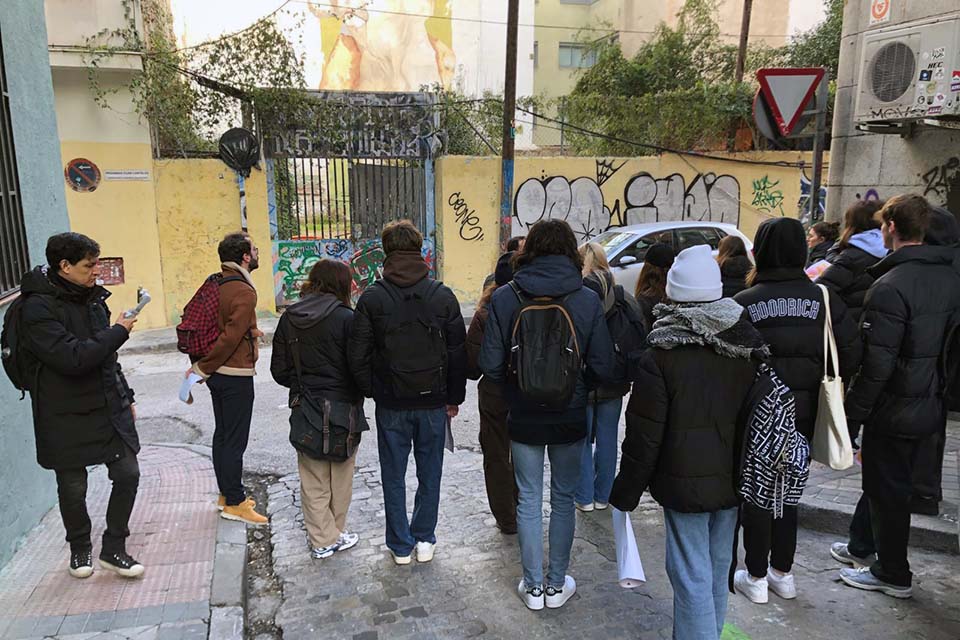
Over a 2-hour tour, students will be able to hear details about the techniques and different styles existing within the street art world. Likewise, Cooltourspain guides will talk about the artists who paint on Madrid’s streets. It will be in the districts of Lavapiés and Malasaña where you’ll discover the message that exists behind the works themselves.
Focused on discovering local culture from different points of view
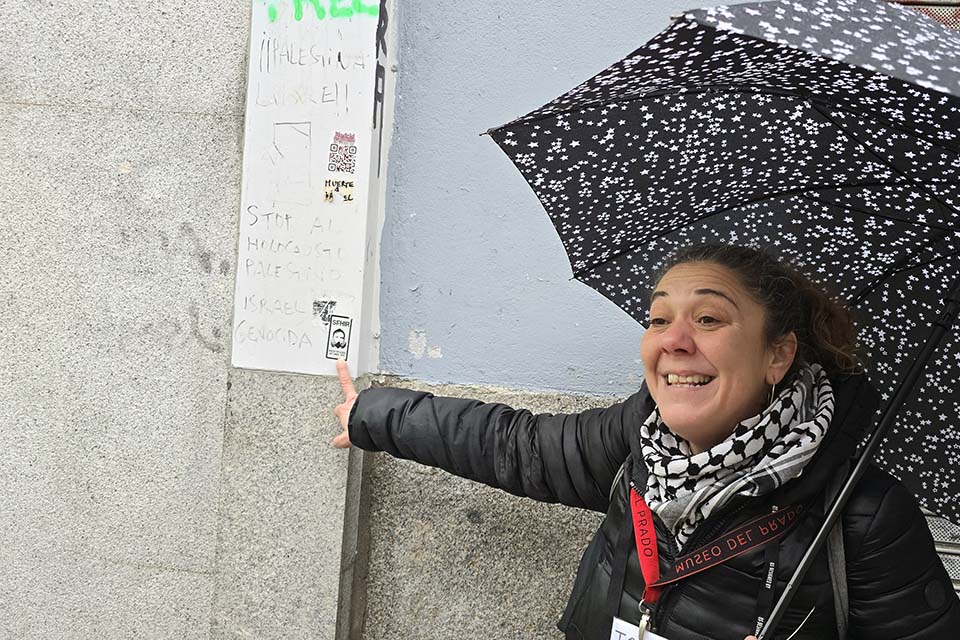
What definition would you give to the term culture? Would you consider graffiti a culture shared by thousands of people around the world or do you think it’s pure vandalism? Whatever your opinion on the matter, we’ll share our point of view on this question. After all, this school trip in Madrid is about sharing experiences and ways of seeing life.
While some people may consider it an artistic movement, even social, others will appreciate it as the disfigurement of public spaces, the urban landscape, and local heritage. In any case, the controversy about the figure of graffiti artists is there, and we’re nothing more than mere loudspeakers of what happens on the streets around the world.
Our team of guides will show you Madrid’s local culture from a perspective adapted to the times we live in. We don’t care about your religion, your country of origin, and/or your sexual orientation. What truly matters to us is educating people in respect for others. Nothing more, nothing less. We use urban art and the messages that artists spread to promote a lifestyle respectful of others. Are you in?
What areas of the Spanish capital will Cooltourspain show you within its school trip in Madrid, Spain?
Regardless of whether you’re looking for a guided walking or cycling tour for your students, or organizing a school trip in Madrid (Spain) within the ERASMUS+ program for a school from abroad, we have an alternative proposal for you. Do you know what the main cultural attractions and neighborhood community projects are around the Embajadores area and the Centro/Universidad district?
There are several urban art festivals like CALLE Lavapiés, Pinta Malasaña, or Urvanity Art Project. Our team of specialized guides will be in charge of informing you about the social and urban context in which they’re found. In addition to this, they’ll be in charge of introducing the 2030 Agenda and the 17 SDGs (Sustainable Development Goals) into the explained content.
Thanks to their preparation and the fieldwork carried out over the years, guides know the details that each artist hides in their works. However, the ephemeral character of urban art and graffiti means they don’t know exactly when the latest creation has been produced on the street. That’s the most surprising thing! Finding new works created overnight.
Lavapiés, perhaps the most multicultural and colorful neighborhood in the center
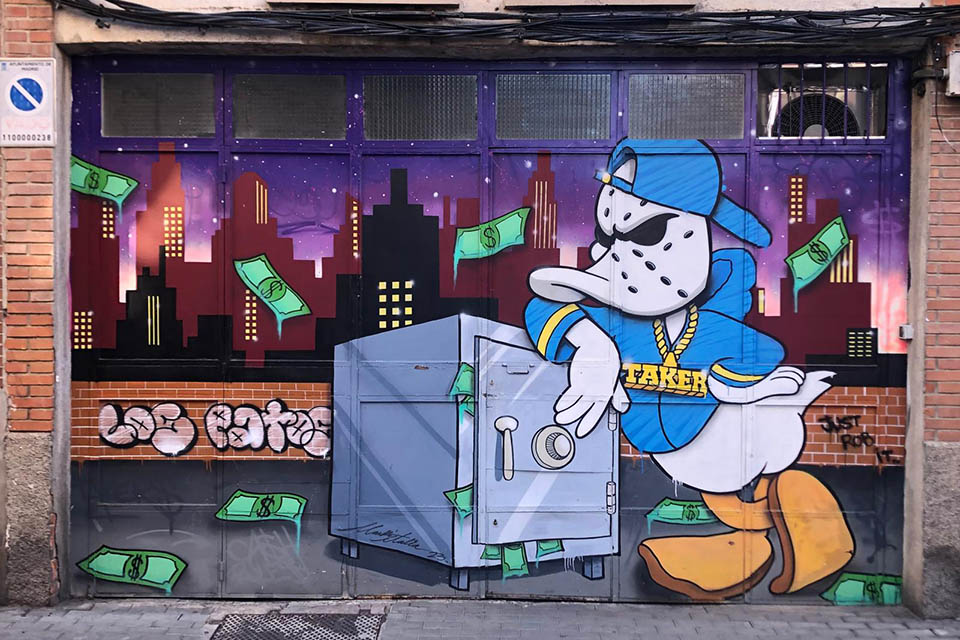
TimeOut magazine cataloged Lavapiés in 2019 as one of the most alternative neighborhoods in the world to live or visit. This catapulted the number of visitors walking through this area, but today it still has that local character that fascinates both Madrid residents and international visitors. And that’s the philosophy we want to convey to students participating in a school trip in Madrid.
We could say that it’s the mix of the new with the most traditional that most surprises those who walk through Embajadores. Even more so if they do it with a neighborhood resident, as is the case with some of our official guides. Additionally, if you add all this to the street art that decorates building facades and metal shutters, then you’ll get a guided visit that will allow you to discover the authentic Madrid. The one you probably would have more trouble discovering on your own.
For anyone reading us right now, Lavapiés is one of the most multicultural neighborhoods in the entire center of the Spanish capital. On its streets, you can hear Hindi, Wolof and other Senegalese languages, Moroccan Arabic (Darija), Spanish, English… Dozens of cultures inhabit this neighborhood, and what we want is precisely to convey to students our respect for each of them.
Interested in participating on a school trip in Madrid, Spain on a bicycle?
If the students who are going to participate in this school trip or an end of the year trip in Madrid are older teenagers and/or come from a country where bike use is rooted in society, then this experience on two wheels is made for them. Even so, it’s necessary to indicate that all participants must know how to ride a bike and wear a helmet mandatorily.
This service lasts approximately two hours and has one guide for every 10 participants. For safety reasons, there must be one teacher/adult per subgroup of students.
The route starts at Calle Montera, 32, from where we’ll do a safety introduction. From there, we’ll pick up the bicycles located less than 100 meters away and begin the ride. This will take us through the neighborhoods of Chueca, Malasaña, San Bernardo, Noviciado, Centro district, and Embajadores. In short, a complete panoramic view to tour the most beautiful murals in downtown Madrid.
A tour to enjoy Malasaña and the “movida madrileña”
Hearing stories about one of Spain’s most transformative periods can help students understand the power of culture as resistance. For many Spaniards, the Franco dictatorship was a time of repression and censorship. However, the 1980s “movida madrileña” became the cultural explosion that followed, a period of creative freedom that helped Spain transition to democracy. This school trip in Madrid Spain will serve to talk about the values of democracy, freedom of expression, and how art can challenge oppression.
For example, we’ll talk about the figure of Muelle, a graffiti artist from the Carabanchel neighborhood named Juan Carlos Argüello. He was one of the pioneers of this whole Madrid street art movement and who spread a new culture among other young people. You may have heard of the singer Alaska or the famous filmmaker Pedro Almodóvar. Both belonged to that generation of young artists who transformed Spanish culture.
This urban art and graffiti route will help participants discover the Malasaña neighborhood from another perspective. Additionally, you’ll be able to see large-format murals and even a traditional market called Mostenses.
Our guides’ opinion about the school trip in Madrid
Working with children and teenagers is something we’ve been doing long before we started with graffiti professionally. For your information, Javier Garcia Colomo (our CEO) has more than 8 years of experience in the educational sector. As an English teacher, he worked in Sheffield (United Kingdom), Odessa (Texas), and Denver (Colorado), as well as in Spain. That broad experience as a teacher in early childhood and elementary education led him to set up this school trip in Madrid.
We love working with teenagers, but what truly fulfills us is being able to train the future citizens of our society. All of this, based on a series of values related to respect, solidarity, and belonging to a community.
Do you want to be part of the change? We encourage you to sign up for any of our cultural activities.
Leave a Reply