
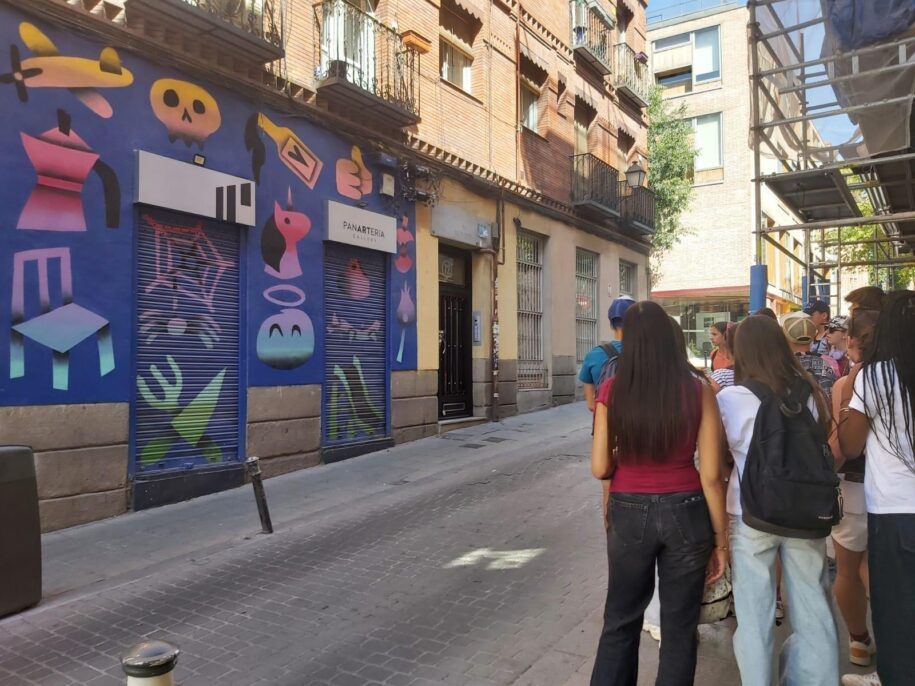
Spain’s capital doesn’t limit its cultural life to Madrid Art Week. With a little curiosity, you can discover a different Madrid street art festival almost every month of the year.
In this article, we explore the key elements behind organising a street art event. Whether publicly or privately funded, these festivals all promote contemporary art in their own distinctive ways.
Experienced cultural managers develop a detailed plan, similar to any other business, to map out costs and projected returns in full detail.
- What drives the success of a Madrid street art festival?
- How do festivals choose their artists?
- Our curated list of Madrid street art festivals
What makes the promotion of a Madrid street art festival work?
Today, the best strategy any Madrid street art festival can follow must be firmly tied to the digital landscape. Showing the general public, or a specific community, what’s coming is almost an obligation.
A well-executed approach, with both organic and paid content through Google or Facebook Ads, can significantly increase the visibility of any project. What would you say is the investment that organisers typically make?
Although word of mouth remains the most powerful form of promotion in our society, digital tools arrived a long time ago and they’re here to stay. Do you follow any street art project on Instagram? Is there an account you’d like to share with us? Write to us!
1. Social media management and up-to-date blog content
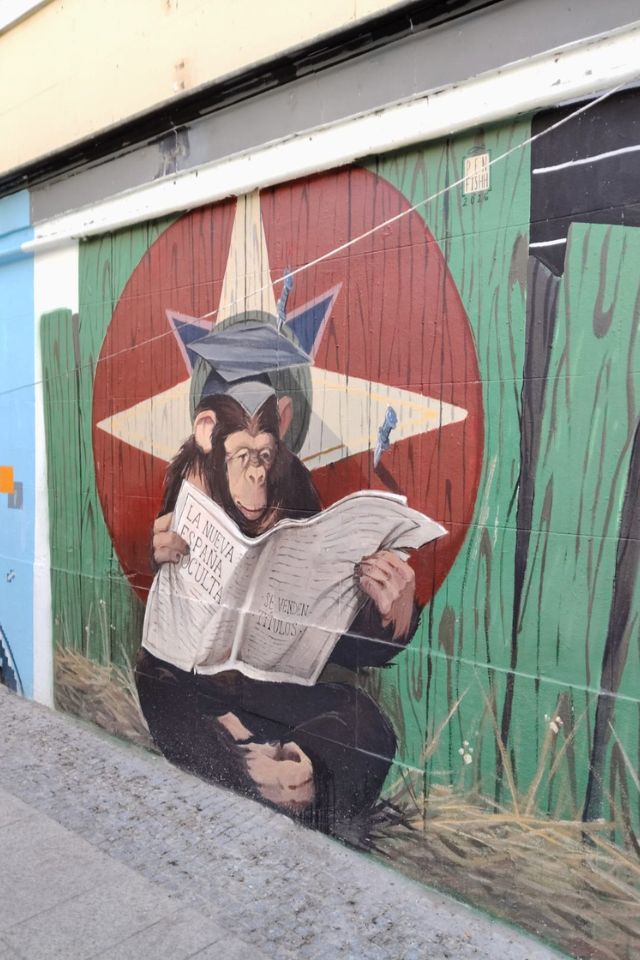
Creating and promoting short video clips from a Madrid street art festival has become an essential task for any community manager. Despite the common saying that a picture is worth a thousand words, video consistently do better than still images in terms of reach and engagement.
A range of tools, both free and paid, allows professionals to schedule publications based on audience data. When are most users online? What are their interests? These are the questions driving good strategy today.
In addition, maintaining a blog with high-resolution photography and original written content is a daily priority for any SEO specialist in this space. Keyword research, content planning, and consistent publishing all play a role in keeping a festival’s digital presence visible year-round.
2. Professional requests and press passes at a Madrid street art festival
Strong relationships with aligned projects should never be neglected. Creative teams and directors from other organisations can become valuable long-term collaborators. In fact, the number of professional connections made through a single Madrid street art festival is often underestimated.
Before any of these events open to the general public, there is always a press preview for journalists and gallerists, as well as early access for enthusiasts keen on exclusive details. Furthermore, reporters from television, radio, newspapers, and specialist blogs act as powerful amplifiers. If the event delivers, the coverage follows.
3. Why sponsorships are a fundamental pillar of these events
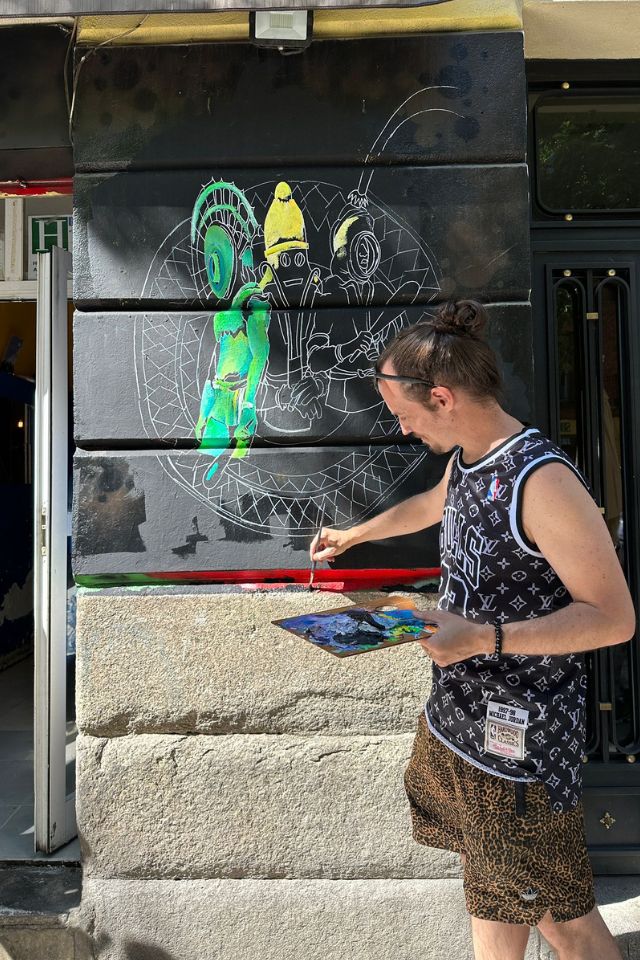
Sponsorship is a core part of any festival’s financial model. Any Madrid street art festival worth its name will typically count at least two main sponsors among its partners: a paint brand and a drinks company. The event may carry those names in part, but the materials supplied through those commercial relationships cover a significant share of production costs.
Moreover, local bars, shops, and businesses benefit directly from the footfall these events generate. Neighbourhood and commercial associations in the surrounding areas consistently view street art festivals as a net positive for their communities. If you want to discover the permanent works these festivals have left behind, our street art tours in Madrid cover the most significant pieces across the city.
The artistic aspects of any Madrid street art festival
The first part of this article focused on the technical side of running a Madrid street art festival. Now we turn exclusively to the artists and their work. Whether on metal shutters, building facades, or the shopfront of a local business, contemporary creators continue to find new surfaces and new things to say. Behind every strong festival edition, one key question drives the creative direction: what feeling or message does the organising team want to communicate to the community?
4. Choosing the right theme for the local community
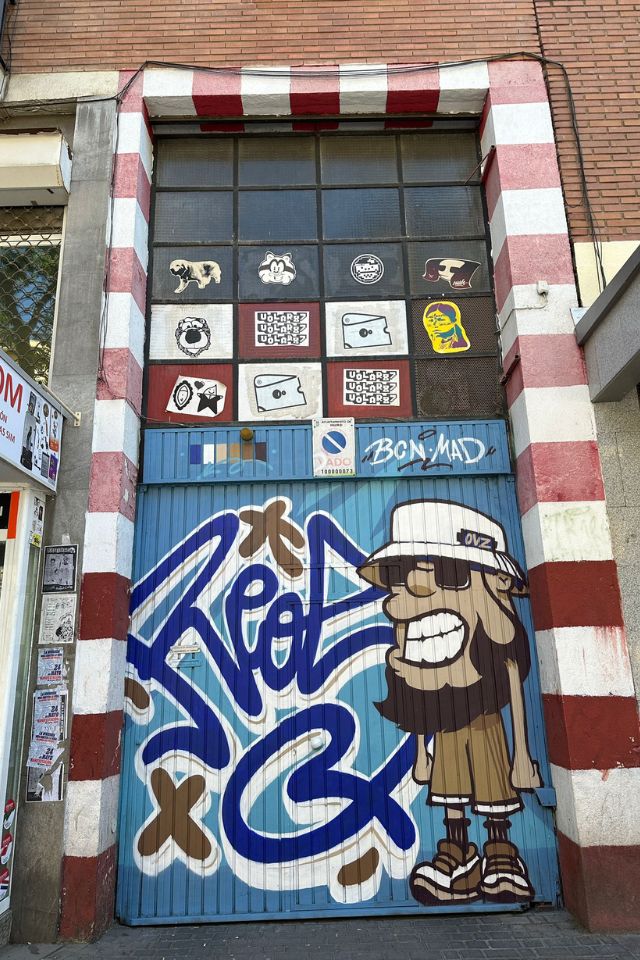
For the organisers of any Madrid street art festival, the chosen theme must partially guide each artist’s aesthetic approach. Technical skill alone is not enough if an artist cannot adapt to the local environment or the community around them.
As a result, organisers increasingly seek artists who bring genuine added value to the space. The goal is art for everyone. You may or may not connect with every piece, but ideally it should catch your attention and provoke some form of critical reflection.
How is the world around us organised? Is there real sustainability and justice? What future do we want to leave for the next generation? This kind of questioning sits at the heart of the broader tradition of social street art that has shaped public spaces across Spain and beyond.
5. How a Madrid street art festival selects its artists
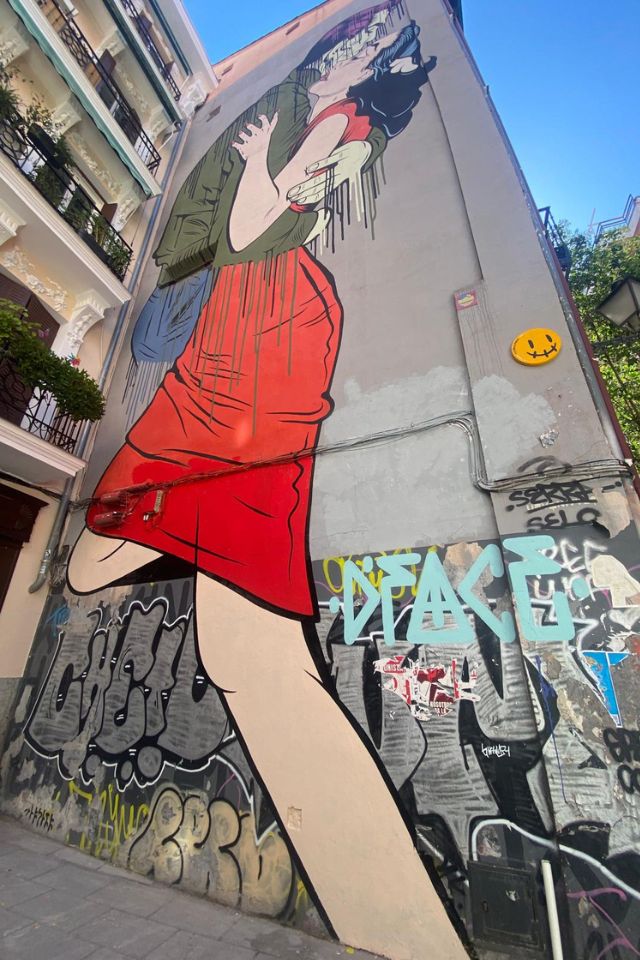
When selecting participants for a Madrid street art festival, professional and artistic track record matters. So does the quality of the submitted proposal. Both carry weight in the final decision.
Some events invite artists directly. Others use open digital platforms where applicants submit a candidacy for a spot at the festival. The volume of applications can make the selection genuinely difficult. In most cases, artists receive materials as a courtesy from the organising team.
However, not all festivals offer financial compensation. Many artists participate, as the saying goes, for the love of the art, and for the visibility it brings.
6. Location and other logistical aspects
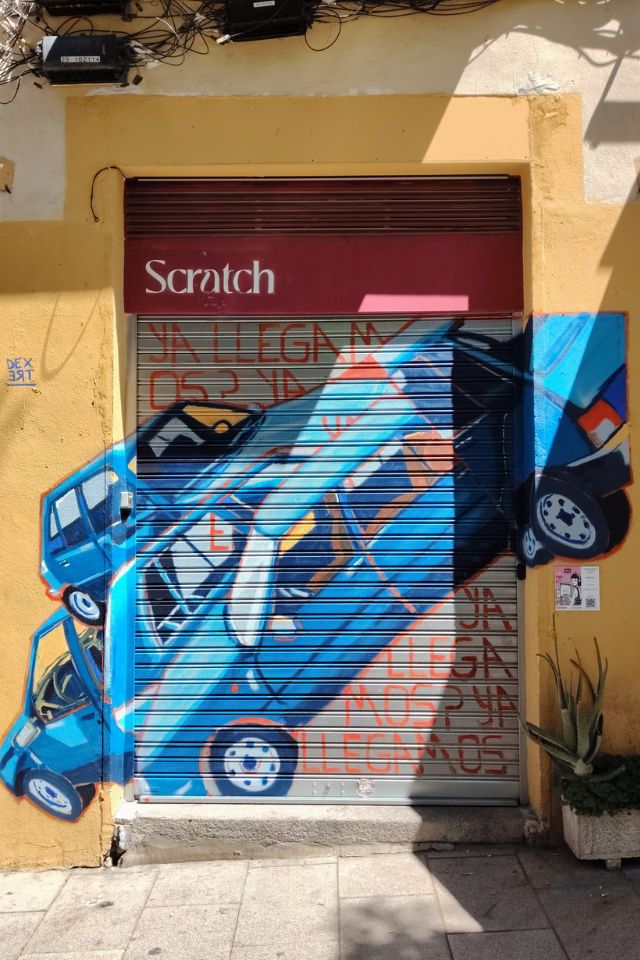
While most events take place in the city centre, some festivals deliberately bring contemporary culture to Madrid’s peripheral neighbourhoods, helping to decentralise the local artistic landscape. The most common surfaces are metal shutters and walls, but artistic interventions always go further.
Found objects, street furniture, and unconventional materials have all served as canvases for emerging artists. From stencils and wheat paste to large-format spray murals, the full range of street art forms tends to find expression across a single festival weekend. Recycling and upcycling have also become central to the creative process at many events.
Our list of Madrid street art festivals you shouldn’t miss
Madrid’s street art festival scene is more active than most people realise. Here is a guide to the key events that shape the calendar, from neighbourhood staples to internationally recognised gatherings.
- Pinta Malasaña takes over the popular central neighbourhood once a year. On that day, local businesses transform into an open-air museum. The ongoing tension between graffiti writers and festival artists means some works don’t survive 24 hours. That energy is part of what makes it compelling.
- CALLE Lavapiés runs each spring, typically across April and May. Over several days, dozens of multidisciplinary artists decorate the commercial shutters of businesses across Lavapiés, one of Madrid’s most culturally diverse and historically rich neighbourhoods.
- Urvanity Art sits closer to a contemporary art fair than a street festival. It’s the place where collectors, artists, and the general public converge during Madrid Art Week, towards the end of February and the beginning of March.
- MOS (Meeting of Styles) is the most important graffiti event in the city. True to its name, it brings together writers of different styles from across Spain and beyond. Check the official MOS channels for the most up-to-date information on venues and 2026 dates.
- Arte al Cubo is a smaller, neighbourhood-scale festival held along the Plaza de los Cubos corridor, near Plaza España.
- Festival Circular, organised by the Madrid Street Art Project association, is firmly established in the San Cristóbal neighbourhood in Villaverde. Its 4th edition took place in October 2025, and the project continues to grow year on year.
Our perspective on Madrid’s street art festival scene
Street art festivals are sometimes dismissed as ephemeral, colour on walls, here one week and gone the next. That analisis misses the point entirely. A well-organised Madrid street art festival does something most cultural events cannot: it changes how a neighbourhood looks at itself.
Pinta Malasaña, CALLE Lavapiés, Festival Circular are not just decoration projects. They are negotiations between artists, residents, institutions, and the streets themselves. The works that survive, the ones locals walk past every day without ever quite ignoring, are the ones that earned their place. That process of earning is the culture.
For school groups and curious visitors, these festivals offer some of the most powerful live learning experiences available in the city. We know this because we work with it every week on our guided tours. Get in touch with us at +34638399784 or at info@cooltourspain.com to find out how we can bring Madrid’s street art scene to life for your group.
Leave a Reply