
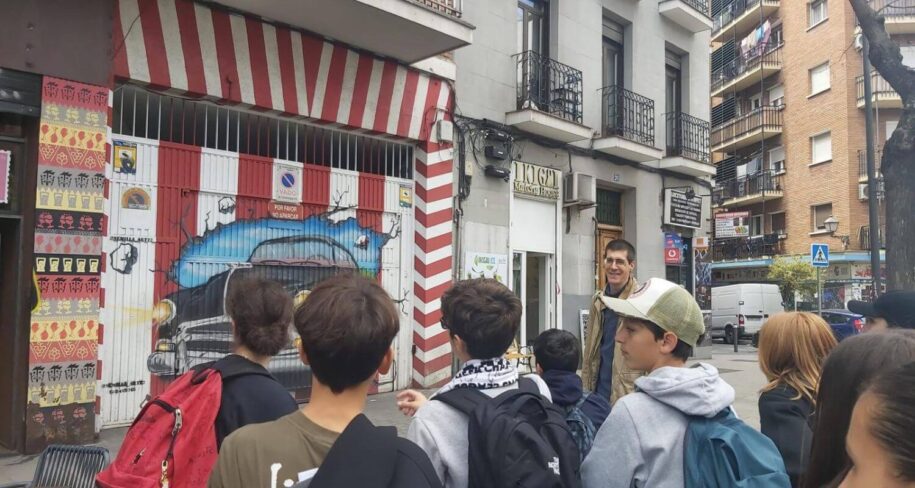
Planning educational trips to Madrid takes time. Teachers balance curriculum requirements, budget constraints, and the very real challenge of keeping a big group of teenagers engaged in a foreign city.
Madrid can deliver all of that, but only if you approach it correctly. After more than ten years of working with school groups in the city, we’ve built a clear picture of what separates a memorable programme from a forgettable one. So, rather than a standard activity list, here is something more useful: the honest do’s and don’ts of educational trips to Madrid.
- Why Madrid beats every other Spanish city for school groups
- The Gymkana Photo Rallye: our most original Madrid activity
- What most teachers get wrong when visiting Madrid
DO: choose Madrid for educational trips that actually challenge students
Madrid is an extraordinary city for school groups. It’s dense, politically charged, visually layered, and endlessly debatable. Most importantly, it doesn’t hide its complexity behind a polished tourist surface. Students encounter real questions here, about identity, inequality, resistance, and creativity, on almost every street corner.
Furthermore, Madrid’s urban art scene is one of the richest in Europe. As a result, it creates learning opportunities that no classroom can replicate.
A city that does the teaching for you
Neighbourhoods like Lavapiés and Malasaña carry decades of history on their walls. Political murals, social commentary, commissioned artwork, and spontaneous graffiti coexist in a way that is genuinely rare in European cities.
Students don’t need to be told what’s interesting. They see it, they react, and the conversation starts naturally. That’s the foundation of any good educational experience: an environment that generates curiosity without forcing it.
Why educational trips to Madrid work better on the streets
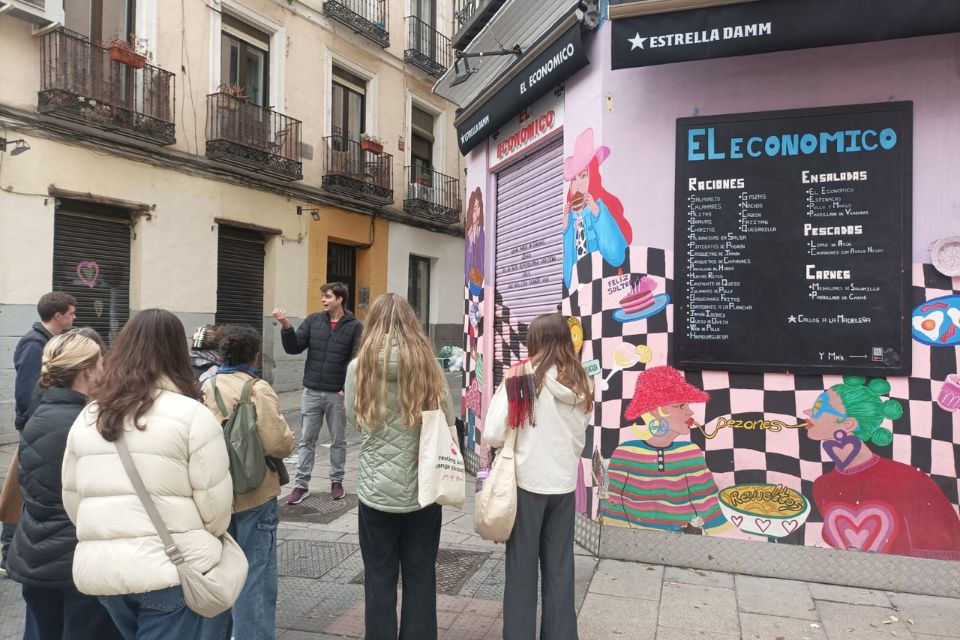
Most of what makes educational trips to Madrid valuable cannot be found indoors. The streets of Lavapiés hold more social history per square metre than many museums. Political street art in Malasaña raises questions about censorship, democracy, and public space that are directly relevant to any secondary school curriculum.
In addition, the multilingual, multicultural character of these neighbourhoods gives language students an immediate context for their studies. Specifically, Madrid is a city you learn by walking through, not by reading about.
DON’T: rely on monuments to do the teaching
The Prado is magnificent. The Royal Palace is impressive. The Retiro is pleasant. None of these, however, are going to produce the kind of engagement teachers are looking for. The problem with monument-based itineraries is not that they’re wrong. It’s that they’re passive. Students stand, look, and move on. There’s no discussion, no interpretation, and no genuine encounter with the city’s living culture.
Moreover, these sites rarely connect with what students are currently studying. A group of sixteen-year-olds standing in front of Velázquez is not automatically an educational moment. Context, conversation, and a guide who knows how to make a painting mean something are what turn a visit into a lesson.
When planning educational trips to Madrid, always ask what students will actively do at each stop, not just what they’ll see.
DO: work with a specialist to get the most from educational trips in Madrid
Not all operators who work in Madrid understand school groups. They understand logistics, bus routes, and booking systems. But understanding how teenagers learn requires a different kind of expertise entirely.
At Cooltourspain, we’ve spent over a decade working with school groups across Madrid for groups of all sizes, from 20 to 200 students. Our guides are multilingual and many have formal teaching backgrounds. That combination changes everything about how the day unfolds.
Tours and guided visits built around active learning
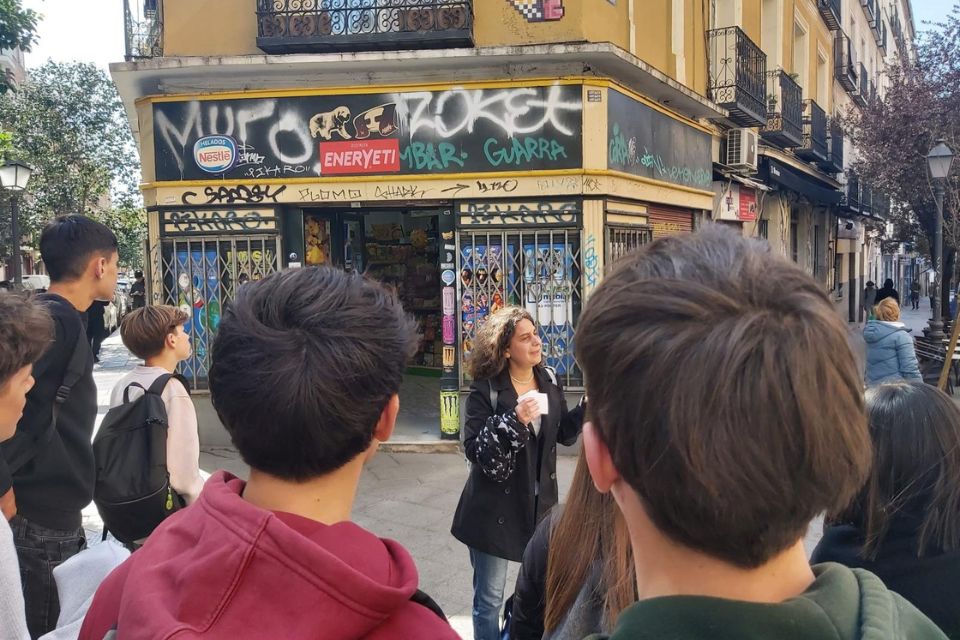
Our street art tours take students into Lavapiés and Malasaña, two of the most culturally complex neighbourhoods in Madrid. Each tour lasts approximately 1h30 and adapts to the group’s age and curriculum context. Students learn to identify street art techniques: stencil, wheat paste, large-format mural, and freehand graffiti.
They also explore the social and political stories behind what they see. Throughout the route, the guide asks questions rather than providing answers. That distinction matters, and students consistently respond to it.
The Gymkana Photo Rallye: our most original activity on educational trips in Madrid
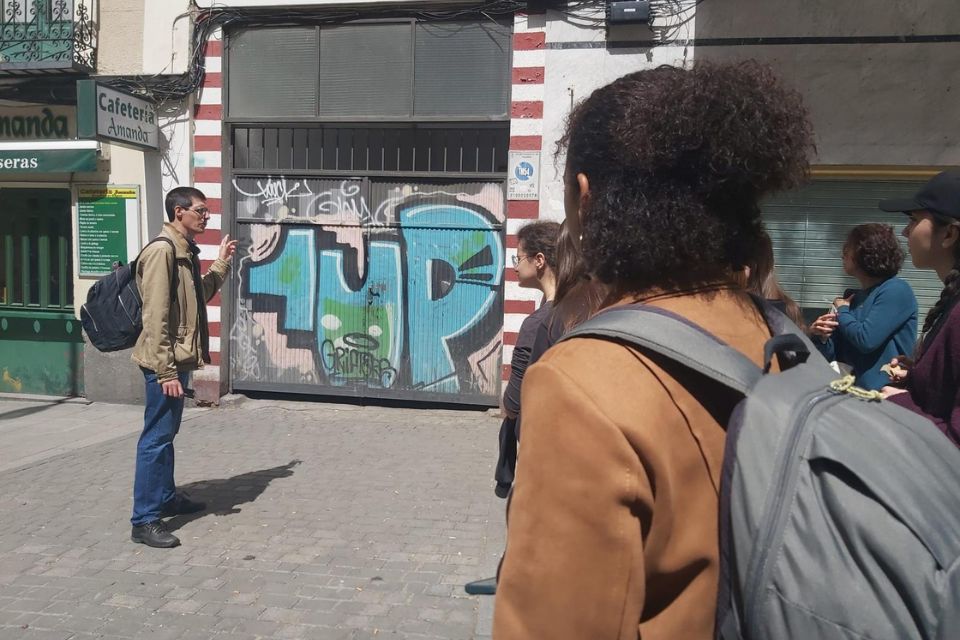
The Gymkana Photo Rallye turns a real Madrid neighbourhood into a team challenge. Students split into small groups, receive a list of visual and cultural tasks, and navigate the area independently. They photograph, interpret, and respond to what they find.
A facilitator manages the structure and scoring. The result is one of the most genuinely engaging activities available on educational trips in Madrid, and the one teachers most consistently describe as a highlight. Find out more about how we plan a school trip to Madrid.
DON’T: underestimate what your students already know
This is one of the most common mistakes we see. Teachers arrive with a prepared script, a set of facts to deliver about the city, and underestimate how much their students have already absorbed through social media, music, film, and their own cultural interests.
Madrid’s street art, in particular, speaks directly to a visual language that young people already understand. So rather than explaining everything upfront, give them space to arrive at their own readings first. Ask what they see before telling them what it means.
The conversations that follow are almost always richer than anything a prepared commentary could produce. As a result, the best educational trips to Madrid are the ones where the guide listens as much as they talk.
DO: give students an active role on educational trips in Madrid
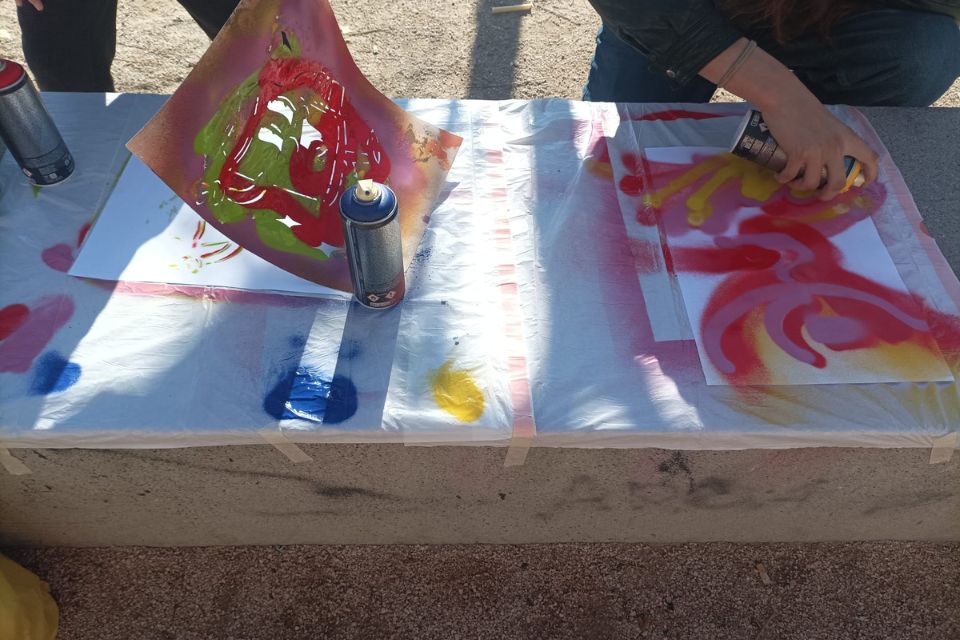
The most successful school groups we work with share one characteristic: students arrive expecting to participate, not to spectate. That expectation can be set before the trip even begins. Brief your students on what they’ll encounter. Tell them they’ll be interpreting artworks, answering questions, and making things with their own hands.
Our graffiti workshops — available on A3 paper or tote bag — give students a tangible outcome they produced themselves. Find out more about the eight educational objectives we cover in every session. Working with a practising artist, students design and execute their own piece from scratch.
For many of them, it’s the first time they’ve made something creative on a school trip. That kind of active participation changes what students remember when they get home.
DON’T: leave logistics and pricing to the last minute for educational trips to Madrid
Madrid is a flexible city for school groups, but flexibility works both ways. Operators who accommodate last-minute requests can often only do so at a cost, in quality, in price, or both. Plan your programme at least six to eight weeks in advance. Confirm group numbers as early as possible.
Our pricing for educational trips to Madrid starts at €15 per student for a street art tour, with workshop combinations from €18 per student on A3 paper or €20 per student for a tote bag. We adjust pricing if final numbers change but early confirmation always produces the best results. A 50% non-refundable deposit secures the booking, with the balance due before the session.
Our perspective on educational trips to Madrid
There is a version of educational trips to Madrid that does exactly what it promises on paper. It covers the major sites, ticks the cultural boxes, and brings students home safely. It is not a bad experience. But it is also not an education.
What we believe is that Madrid has something genuinely rare to offer school groups: a city that generates real intellectual friction. Lavapiés and Malasaña are not picturesque backdrops. They are places where inequality, cultural diversity, and political resistance are visible on every corner. Students don’t need to be lectured about these things. They need to be put in front of them and given the tools to think.
That is the standard we apply to every programme we design. It is also why, after more than ten years, schools keep coming back for a second trip. Get in touch with us at +34638399784 or at info@cooltourspain.com to build the programme that fits your group.
Leave a Reply