
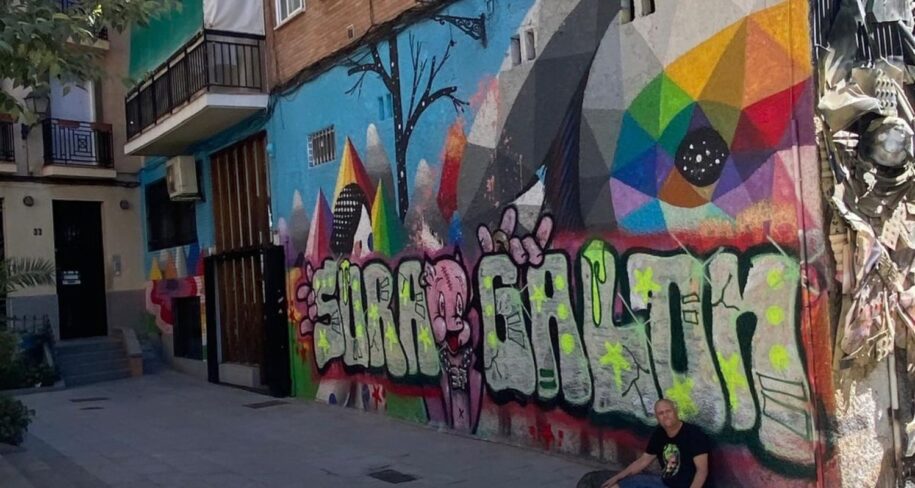
Urban art in Madrid has evolved into a dynamic and visually striking part of the city’s identity. As you stroll through the neighborhoods of Lavapiés, Malasaña and others not as famous, walls speak through colors, symbols, and stories, told by both local and international artists. But this artistic explosion also raises questions: is it a genuine cultural movement or has it been co-opted by commercial interests?
Some voices within the traditional graffiti community argue that what’s now considered “urban art” is far from the raw expression it once was. They claim it’s been gentrified : polished, monetized, and sponsored by corporations looking to capitalize on its coolness. So, is urban art in Madrid thriving authentically, or simply evolving into a new, branded version of itself?
The soul of urban art in Madrid’s city center
The beating heart of urban art in Madrid can be found in its central neighborhoods, where artistic expression collides with cultural identity. These districts have long served as canvases for the city’s rebellious spirit, especially in community spaces like La Tabacalera and its surrounding streets.
These urban hotspots are not only iconic but essential to understanding the trajectory of street art in Madrid. They offer an organic connection between the local community and the artists who bring the walls to life, sometimes legally, other times not.
La Tabacalera: the creative core of Embajadores
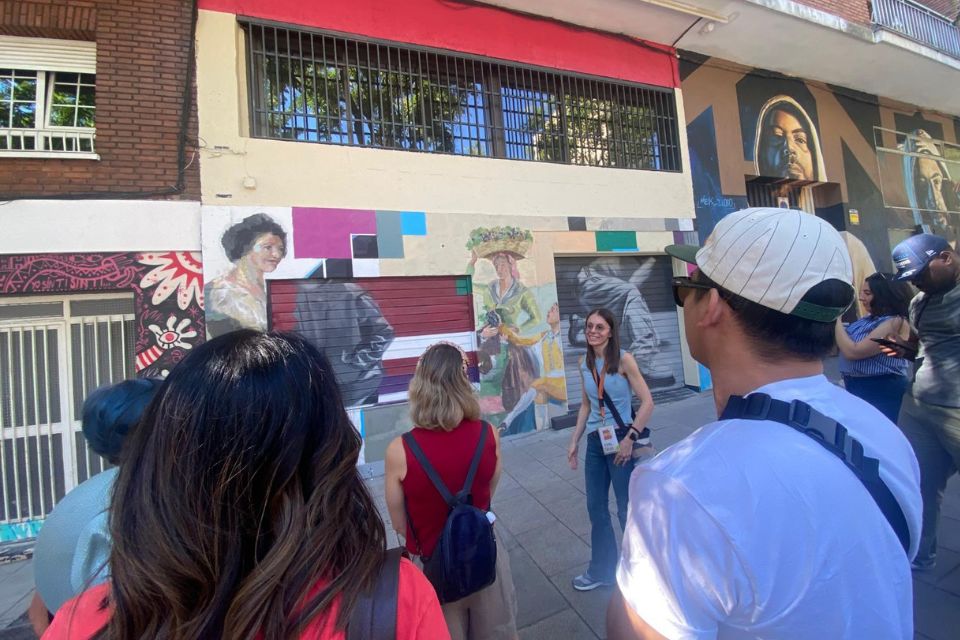
La Tabacalera, located in the heart of Embajadores, is a former tobacco factory turned cultural center. This space used to ve a playground for graffiti artists, muralists, and creatives of all stripes. It has been undergoing renovation since 2023, the existing plan seems to turns it into a cultural center and to offer artistic residencies.
For years, El Keller collective ran an open street art workshop inside the building. Anyone could attend, learn the fundamentals of spray painting, stenciling and wheat-pasting, and connect directly with the resident artists. It was more than a workshop: it was a genuine example of urban art serving as activism and community engagement. Cooltourspain collaborated with many of the artists who were part of El Keller before the space closed in late 2023.
Events like Muros Tabacalera bring life to the area by commissioning artists to paint massive murals. These works often carry strong social messages, blurring the line between public service and art. It’s this dual role, beautifying space and provoking thought, that defines urban art in this zone.
The combination of legal and illegal murals shows the diversity of expression present. While some artworks are backed by institutions, others remain unsanctioned, raw and political, preserving the rebellious roots of street art.
What are the most important galleries for urban art in Madrid around calle Valencia?
When it comes to urban art in Madrid, Calle Valencia and its surrounding area in the Lavapies district are home to some of the city’s most influential galleries. One standout is Swinton Gallery, located just a short walk from Calle Valencia. This Madrid art gallery focuses on street art, illustration, and post-graffiti movements, hosting regular exhibitions by both emerging and established urban artists from Spain and abroad.
MXM Gallery (previously known as La Causa) is another key player in the neighborhood which blends the raw energy of street art with curated gallery aesthetics. Situated near Calle Valencia, this gallery showcases works that reflect the social and political edge of urban art in Madrid, often featuring local muralists and international figures with strong roots in graffiti and urban expression.
Lavapiés and Embajadores: more than just a street art tour
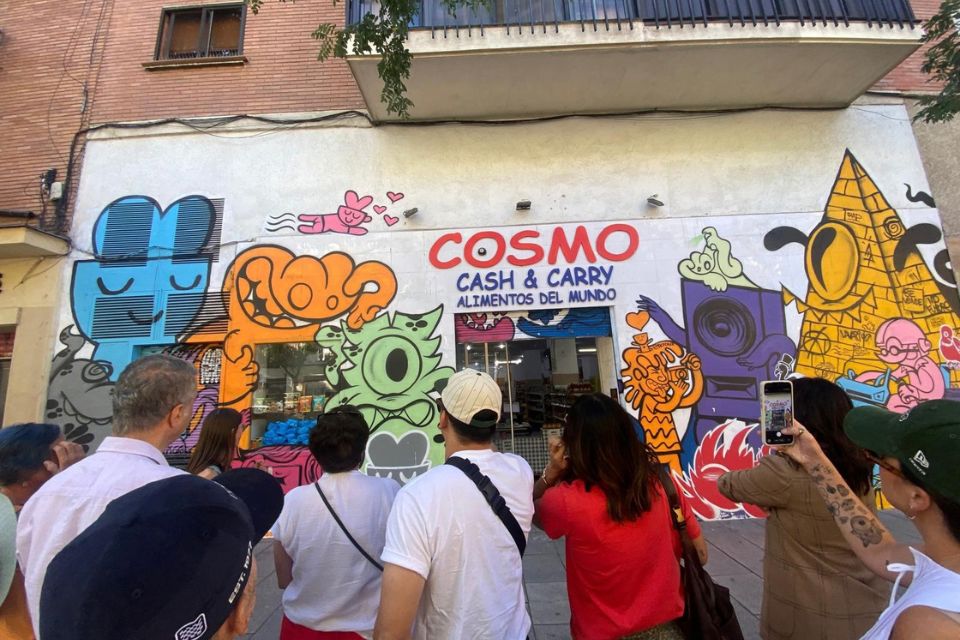
Street art guided visits in Madrid often take place in Lavapiés and Embajadores, but their significance runs deeper than tourism. These neighborhoods are cultural melting pots where artistic styles, from calligraphy to political graffiti, interact and evolve.
Visitors discover both historical context and modern artistic movements during these tours. The guides are often artists themselves, offering insider perspectives that transform the experience into a conversation rather than a lecture.
It’s in these districts that you can understand how urban art in Madrid serves both as self-expression and as a social mirror. The murals reflect issues like immigration, housing, and inequality, making them as informative as they are beautiful.
Malasaña: from underground scene to hipster art hub
Once known for its counterculture and drug scene, Malasaña has undergone a complete transformation into a trendsetting neighborhood. Today, its streets and storefronts are alive with colorful, curated street art.
But is the shift from underground rebellion to Instagram-ready murals a sign of artistic evolution or commercial dilution? This is one of the core debates surrounding urban art in Madrid today.
Pinta Malasaña: when art meets commerce
One of the most well-known events in Malasaña is Pinta Malasaña, an annual street art festival where artists paint live across the neighbourhood. While it brings visibility to emerging talent, the event is also sponsored by businesses eager to attract a creative crowd.
The metal shutters of bars, cafés, and boutiques become canvases for commissioned murals, often designed to match a brand’s image. This creates tension between authentic expression and market-driven aesthetics.
Critics argue that this kind of sponsored art dilutes the original spirit of graffiti. But others see it as a necessary evolution, offering artists financial support and wider exposure. Either way, Pinta Malasaña has become a cornerstone of urban art in Madrid, blending creativity with commerce.
Plaza Dos de Mayo: an open-air art gallery
Walking through Plaza Dos de Mayo offers a different, more spontaneous experience. This open square functions like an informal gallery, where new murals and tags appear almost weekly.
Here, you can find the work of both well-known and underground artists such as Por Favor, Vivet, Concreto, and Dloio : many of whom are veterans of Madrid’s street art scene. Their styles vary from abstract to political to humorous, reflecting the diversity of voices in the city.
Day or night, the plaza invites exploration. It’s not curated or polished, it’s real, raw, and very much alive. For many, this is what keeps the spirit of urban art in Madrid intact.
Graffiti writers: keeping the edge alive
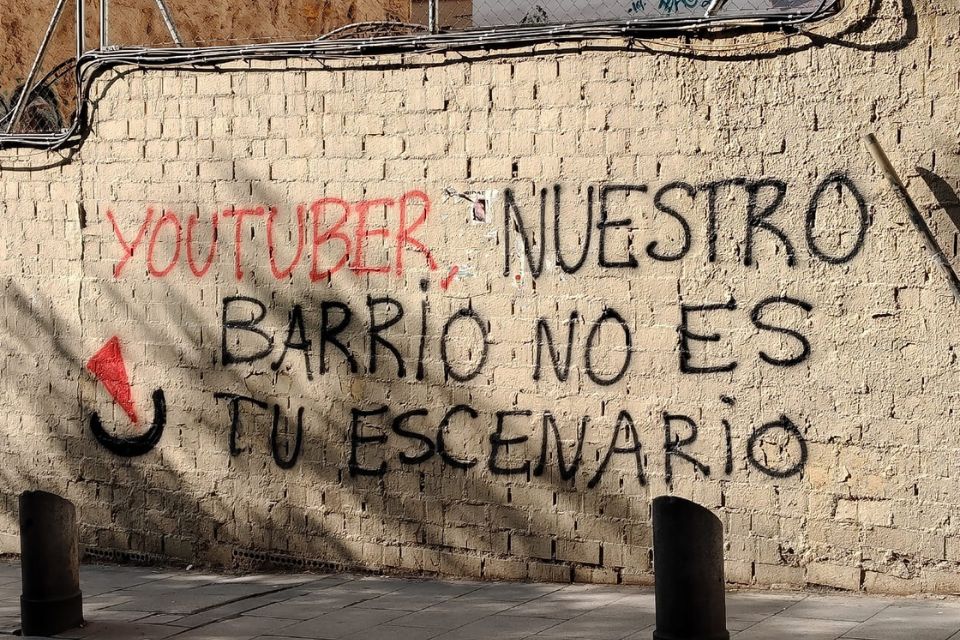
Despite the commercialization of street art, graffiti crews continue to thrive in Madrid. Groups like the 1UP Crew maintain the genre’s rebellious edge, leaving their marks across rooftops, tunnels, and train lines.
These artists often reject the gallery route and see commissioned murals as a betrayal of graffiti’s original purpose. For them, the city is a playground, not a portfolio.
They are the underground current beneath the glossy murals, ensuring that the anarchic pulse of street art still beats strong. In a sense, their defiance is what makes urban art in Madrid truly dynamic and multidimensional.
Final thoughts: is urban art in Madrid at its peak?
Whether seen as a cultural renaissance or a commodified trend, one thing is certain: urban art in Madrid is having a moment. With more festivals, murals, and workshops than ever, the city is embracing creativity in public space like never before.
Still, the conversation continues. Can street art remain authentic in a city increasingly shaped by tourism and gentrification? Or is this just the next phase in a constantly evolving art form?
Whatever your stance, there’s no denying that Madrid’s streets are alive with color, character, and controversy. If you want to make your own opinion on the subject, get in touch with us at +34638399784 or by email at info@cooltourspain.com.
Leave a Reply